Cupping, Crowning and Buckling in Hardwood
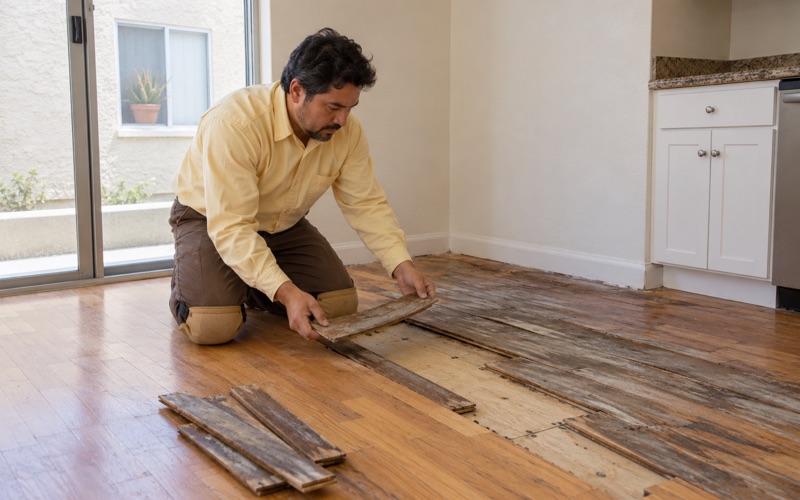
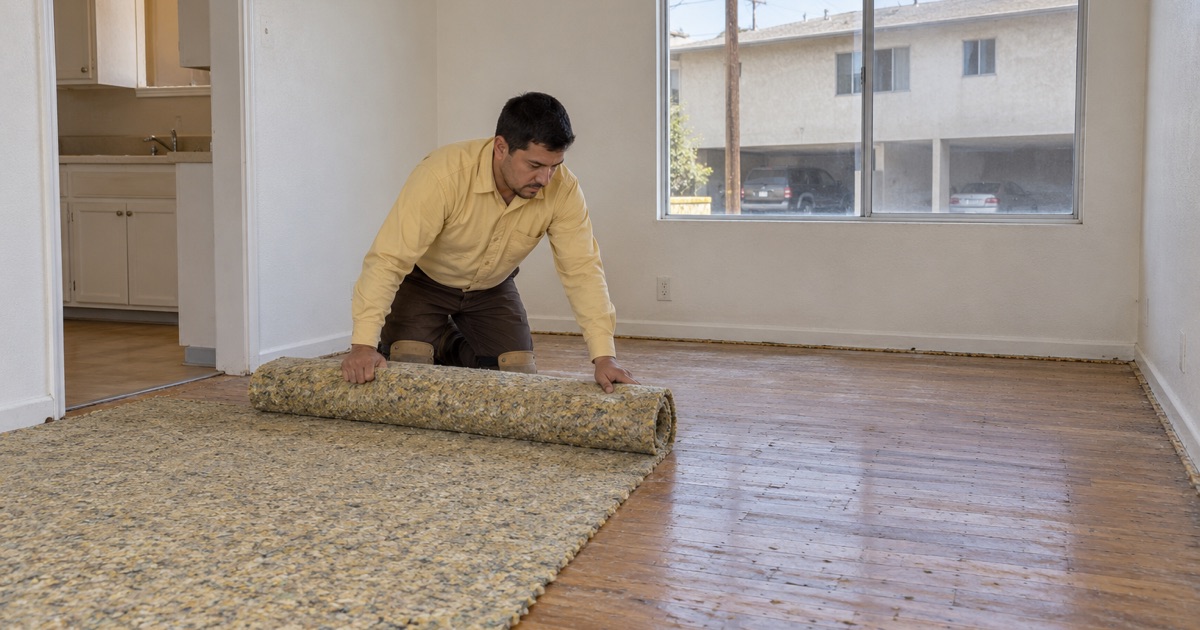
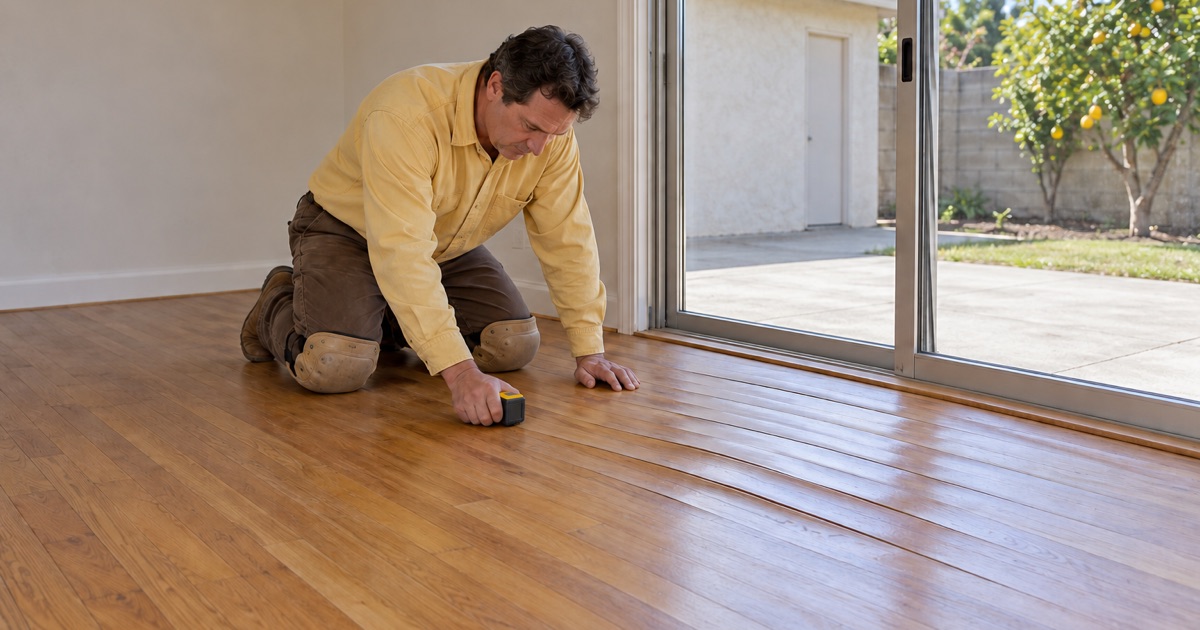
Cupping is when board edges rise above the center, crowning is the reverse, and buckling is a floor lifting off the subfloor entirely. All three are moisture problems. We find the source first, whether a slab, a crawlspace or a leak, because sanding a cupped floor flat before it dries only makes it crown later.
Gaps Opening Between Floorboards
Some seasonal gapping is normal in solid wood as the air dries out. Wide, permanent gaps usually mean the boards were installed too wet, or the floor has lost fasteners. We measure the moisture, check the nailing and decide between filling, replacing a few boards or relaying a section, so the fix matches the cause.
Squeaky Floors and Noise for the Neighbor Downstairs
Squeaks come from boards or subflooring rubbing against loose nails and moving over joists. We refasten from above or below, add screws into the joists where the structure allows, and on upstairs units consider acoustic underlayment. That matters in a building where the person under you hears every step.
Soft Spots and Sloping Floors in an Older House
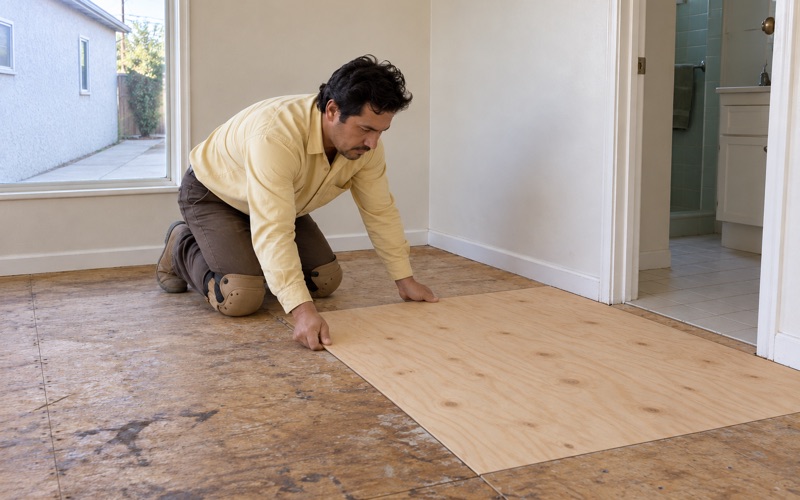
A soft spot or a slope in a raised-foundation house usually points to rotted subfloor, a failing joist or a settled post under the house. We check the crawlspace and cripple walls before touching the finish floor, because refinishing a floor that is still sinking just gives you a nicer-looking problem.
Water From a Leak, a Water Heater or the Unit Upstairs
Water damage in hardwood rarely stays where it started, and in multi-unit buildings it often comes from above. We trace it to its source, take moisture readings across the floor and the subfloor, and photograph what we find. That record tells you what must be replaced and gives an insurance adjuster something to work from.
Termite Damage in Hardwood Boards
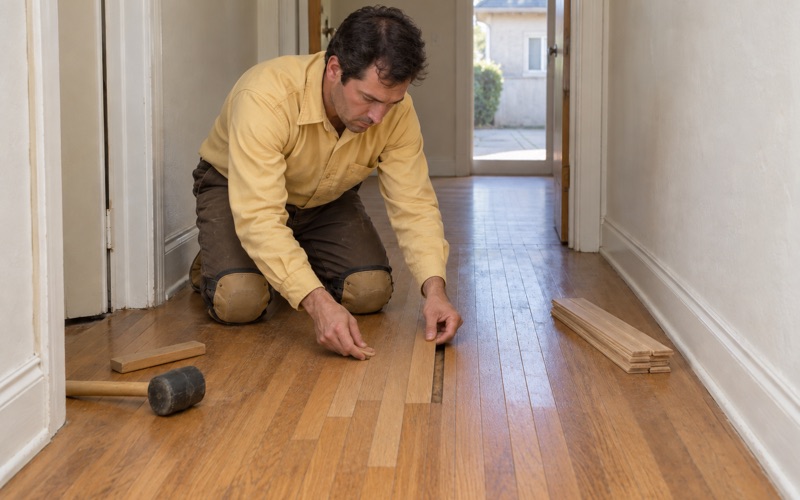
Drywood termites leave small kick-out holes and piles of pellet-shaped frass, and they can hollow a board while the surface still looks sound. When we find it, we recommend a termite inspection and treatment first, then replace the damaged boards with matched wood so the repair disappears when the floor is refinished.
Pet Urine Stains in the Wood
Pet urine that sits on a floor soaks past the finish and turns the wood dark gray or black. Light stains sometimes sand out, but deep ones rarely do. We test with sanding, and where the stain has gone through the board, we cut it out and weave in new wood rather than leaving a shadow under fresh finish.
Deep Scratches and Gouges From Furniture
Moving furniture can leave gouges deeper than a screen and recoat can reach. Depending on depth, we fill, sand through, or replace the damaged boards. We also put felt pads on and advise on how to move heavy items so the new finish is not scarred on the first day back.
Peeling, Hazy or Worn-Through Floor Finish
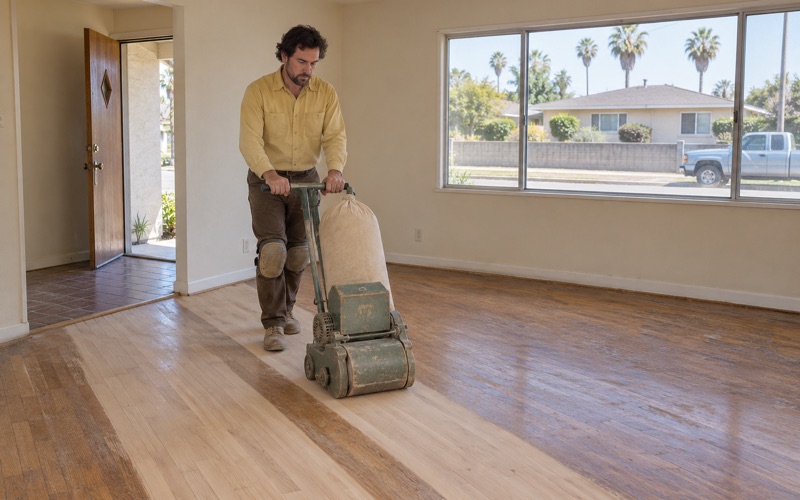
Peeling polyurethane usually means a new coat went over wax, polish or contamination it could not bond to. A hazy, gray finish is often polish buildup, and worn traffic lanes mean the wood itself is exposed. We identify which you have, because a peeling floor needs a full sand, while a worn one may only need a recoat.
Red Oak That Has Turned Orange
Oil-based finishes amber with age, and on red oak that shows as an orange cast many owners dislike. The only fix is sanding to bare wood. We then choose a clear waterborne finish, and sometimes a stain, that neutralizes the orange tone so the floor looks the way you want it to look.